The War Zone

Wilhelm and I stood  in the corridor, the scenery afforded to us by the long windows was but a small compensation for the lack of insulation between the elements outside.  We shivered in our failure of hooded jackets and REI thermal shirts. I planned to personally slap the REI product developer in the face upon my return to the US, wondering if the company had bothered to test their cold weather products in actual cold climates.

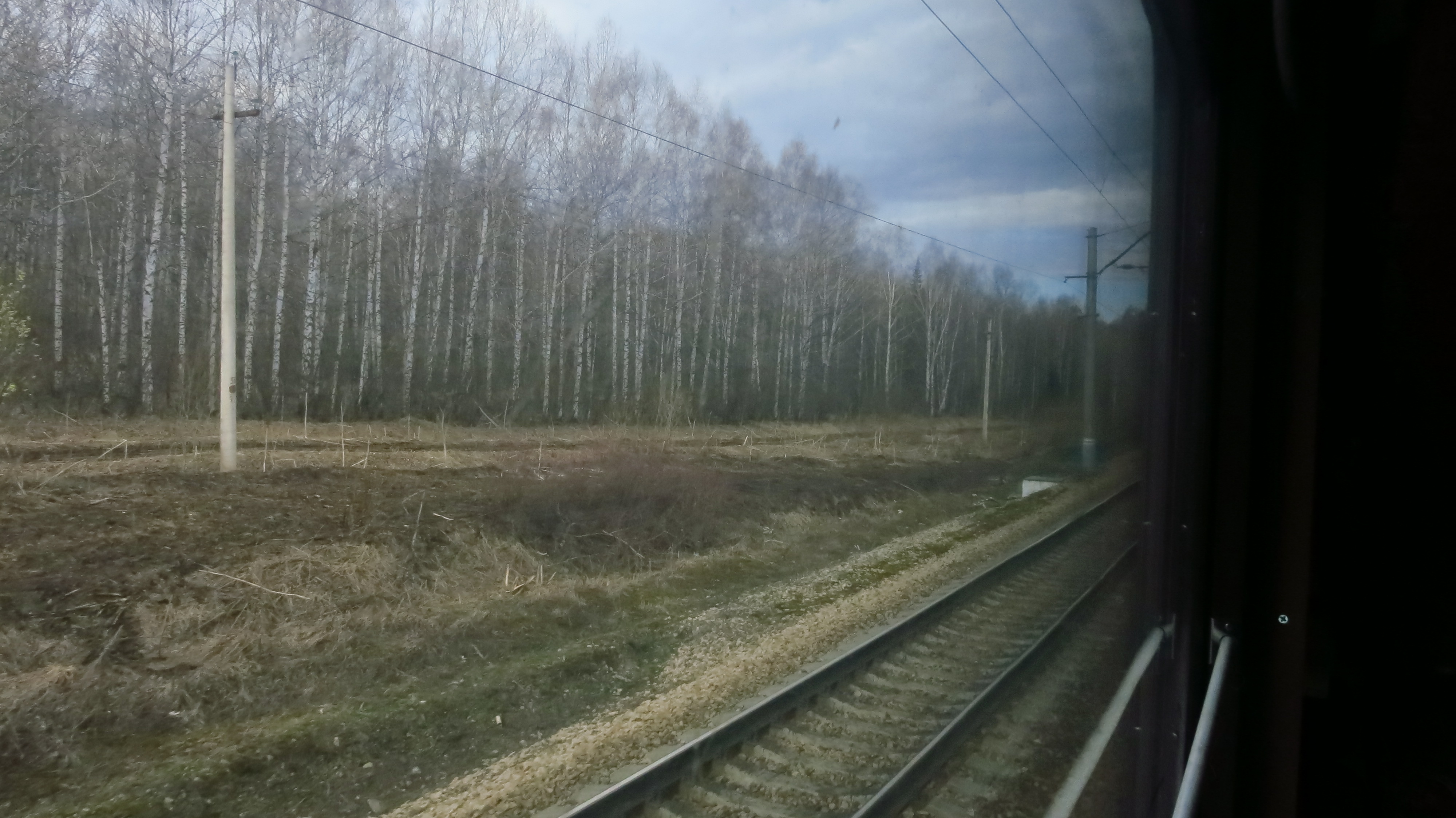
Anka was busy typing her new screenplay while her husband and I stood there. Ekaterinburg six hours before had marked the entry into European Russia and away from Asian Russia. Despite the subzero temperatures I was ecstatic to be one train track closer to the West. Lanky pine trees replaced the naked birches, and the Ural Mountains, covered in forests and soggy black log cabins, stretched into the horizon. Visions flashed in my dreams of traipsing the mountains, which time had worn down to gentle hills, all the way south through the Caucuses down to the Caspian Sea. I had to remind myself that they awaited me  in a few weeks’ time, just as this journey bided its time for me for eight years years, readying itself to welcome me as a guest in a time when I didn’t even know the invitation existed.

Visions of the Transiberian Rail journey entered my consciousness a lifetime before, when I shared a beer with a Stanford University drop-out at a Krakow hostel and he mentioned he was headed to Beijing to teach English, and would take the train on the way. At the time, I wanted to drop everything and tag along. But I had school to finish in Spain, and then life was to unfold–military service, disability,  marriage, divorce, things like that. But finally, years later, the chance to take the journey came again. It’s how I found myself nearly five days into the six-day trek from Beijing to Moscow.

Wilhelm snorted in laughter, bringing me back to the present. “Look at this place,” he said, pointing to the razed artillery yards now coming into focus. Warehouses punctuated the endless forests, their windows blown out, leaving behind gaping holes and crumbling bricks. The tall watch towers, one right in front of us and the other in the distance, were both toppled over.

Cabins in the distance clung to rotten wood and corrugated steel, but were inconsequential compared to what was driving near the train. A bedazzled Hummer, equipped with multiple sets of blinding florescent headlights, platinum rims on the tires, and air-brushed designs on its hood, crawled at parade-route speed through the abandoned environs, like a UN aid truck with an identity crisis.

“Of course,” said Wilhelm, shaking his head. “Of course that would be here. This place looks like a war zone already. If not here, then where?”

I smiled, although at that point Lady Gaga could have emerged from the crumbling warehouse or one of the acrobats from Beijing could have triple-flipped across the charred landscape and it wouldn’t have surprised me. Seven weeks into this journey–the child prostitutes in Thailand, the shattered skulls and blood stains in Cambodia’s Tuol Sleng prison, the dysentery and soldier ghosts in Vietnam, the police state in their designer clothes in China, and the drug smugglers at the border in Mongolia—nothing surprised me anymore it seemed.

The rain intensified, splattering the smeared pane. I bid my neighbors goodnight and returned to my cabin. Another frigid night awaited but I needed whatever traces of slumber the cold would be willing to provide. Moscow would greet me in less than 24 hours and I had to rest, to focus. The past 5 days ensconced on the train, sheltered from the countryside but still so exposed, may have been an ill preparation for the awaiting city.

This part of the journey, the one I thought I would dislike the most due to its crowd of people, its lack of privacy, and the wrought boredom, had been nothing like that. It had instead been my favorite part. The train’s sparse population, and the quiet and isolation of traveling with so few people at the beginning had compounded a broken heart. That part of the story, if it’s even worth telling, is for a different time. But as the days passed and the Siberian sun stretched and inevitable introspection forced itself upon me, I knew I would be okay even if I was alone. I just wish I would have known it weeks before. Or years before.

But it was unfair to judge the past and those things I did not know then. Perhaps all I had to begin with–myself–was all I ever needed.

At that point, the brooding and epiphanies no longer mattered. The train’s hypnotic sway rocked me like a lullaby as I crawled into bed.  Four wool blankets piled on top of my body were my shield from the intrusive ice working its way through the berth windows. I closed my eyes as resignation, sorrow, contentment, and acceptance took their final waltz through me, and I remember thinking how well I would sleep that night.
Image

From Cartagena to Infinity

From Cartagena to Infinity

Three years ago, Cartagena found me. Much to my surprise, it  was not the Cartagena of my childhood and “Romancing the Stone” frame of reference. I expected to find the same car-chases and hand-biting crocodiles that Jack Colton and Joan Wilder encountered when I arrived late one humid night in November, but all that met me was drizzling rain and potholes large enough to swallow one of those crocodiles as the taxi cab careened down the blackened highway.

When I awoke the following morning to explore, those preconceptions faded as the imposing fortresses that guarded the pastel-colored haciendas and hushed plazas appeared. It was the stuff of Gabriel Garcia Marquez’s dreams, and mine since reading his books a lifetime before in my small-town land-locked days of adolescence. Cartagena could not be real, I told myself as I climbed the crumbling stones of its fortress.

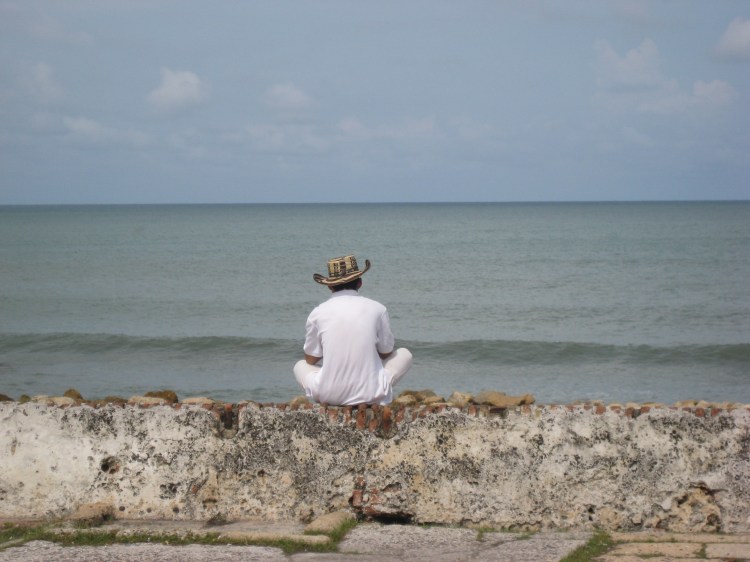
At first I thought he was a statue, standing on top the rock wall, keeping guard like a 16th century centurion watching for pirates. But as I got closer, the young man pulled out a handkerchief, blowing his nose before sitting down on the wall’s ledge. He stopped me in my tracks and I stood motionless, inexplicably overly cautious and concerned I would disturb him if I took another step. An eternity passed as I leaned against the cool stone, watching him as he watched the blues and greens of the Caribbean Sea. I wish I knew what he was thinking. Was he solving a personal problem in his head? Was he meditating, comforted by the distant crash of the waves that would have carried us to Africa if we had let it? Or was he, like I, so transfixed with the sea’s infinity that nothing else mattered? I will never know what the silent young man was thinking.

There is a perfect sentence from Marquez’s story “Love in the Time of Cholera” that says “It was a lone voice in the middle of the ocean, but it was heard at great depth and great distance.” Perhaps the young man could hear it as he contemplated that sea’s infinity. Maybe next time I will hear it, too.


Twenty Minutes to Moscow

IMG_2874

Finally, the time on my watch and on my iPhone’s intermittent reception correspond with the train schedule that was posted on the corridor’s wall–the one that had been mocking me since I left Beijing six days before: Moscow Time.

It’s funny how inconsequential time becomes when you’re on a train for so long.

The whole concept of “are we there yet?” does not apply, because you know damn well you are not. The vast plains that stretch before you, the forests’ stark shadows that play tricks with your mind, the tundra that haunts and chills you even as you sit safely in your train berth, and the myriad train depots acknowledged but for a minute, all indicate the thousands of miles left.

So you do not wait. All you do is exist, attempting to find meaning in the shifting environments and the stories of travelers encountered on the same journey. You bide time, finding that the only constant and only source of strength in the frozen tundra of uncertainty comes from within.  The time then passes so quickly once you’re at peace with this permanent state of journey.

That is, until the last hour of the trip. Any notion of reason, patience, and preoccupation is thrown to the wayside, another piece of trash on the train tracks, yet another bit of flushed excrement from the train toilet disappearing as the wheels race by.

Suddenly, time is torture.

The train crawls. The seconds stagger, a drawn-out dance around the outskirts of Moscow. The welcoming committee includes the graffiti murals and beige smoke stacks, and the crumbling brick warehouses with their barbed wire, nodding as you pass. Citizens–bare-chested paunchy men grilling for the bleach-blonde women by their side, outfitted in leather pants and five-inch stilettos–lounge at picnic sites near sparse grass embankments, a life-saving green compared to the thick dust and gray of lands and time zones past–perhaps only three days before yet a lifetime away now that you’ve come so far.

Twenty minutes left before the train pulls into the station. The past six days are a flash of memory, and now those last moments of the journey are the burdens too difficult to bear.

I am antsy. My stomach is a roller coaster on these otherwise smooth tracks, gently swaying past more and more concrete buildings and churches and crowds. The frigid frontier nights the past week across China, Mongolia, and Siberia, with the stern border guards and drug-sniffing cocker spaniels and glare of florescent lights, the possibility of urban legend of nocturnal bandits made reality, were never dangers.

But now, the grandmotherly comfort of my train berth, the normalcy of passing fields and chasing the sun that became my sanctuary, are leaving me as the K3 from Beijing pulls into Yaroslavisky Station. I have never been so scared.

Twenty minutes is now a lifetime.


Image

Market Dreaming

Market Dreaming

It was mid-morning as I made my way through Hue’s market. Its interior is usually packed with vendors and shoppers and hawkers and children darting under tables and around legs like some half-crazed squirrels. But it was too early for that and the only sound was the ceiling fans struggling to circulate.

She wasn’t the only meat vendor fast asleep. Several stretched out on the cool cement floors and if you didn’t watch look where you were going, you would have accidentally tripped and woken the women from their slumber. They were all women, and I wondered how late they must have worked the night before or earlier that morning to slice, chop, or, most of the time, hack the animal parts.

I stepped away from her, turned off the automatic flash, and held my breath, hoping the “click” of the camera would not wake her, or any of them. Nobody stirred as I turned to tip-toe out of the building.

The Faces that You See

Boy on Thai Train

I wanted for so long to write a post about this picture but was unsure of where to begin. I find that there are certain images, or flash points that you come across as a traveler, that you just can’t shake; some of these are disturbing, some are benign, but their commonality is their resonance that grasps you weeks, months, or years after. And so it was with this one.

The easiest way to get to Bangkok’s Chinatown was to leave the metro train at Hua Lamphong, its central train station whose ornate wooden roofs and stained glass windows place you in another time. Outside by the sticky and dusty platforms, many of its railcars were no different. I remember walking in slow motion, weaving around the vendors squatting on tiny plastic chairs peddling their tropical fruits. I could have spent a lifetime photographing the platform vendors, but what I really wanted was to peak inside the commuter trains. Unlike the futuristic metro train and its spotless sleek capsules that zoomed over the Chao Phraya River and Grand Palace, like some better-colored and more exotic Tomorrowland, these trains, headed to the smaller villages in the countryside, were different. Their interiors were a sighing teakwood with hard benches for seats. They were painted in deep burgundies and golds, with yellowed dusty linens their curtains, hanging heavy in the afternoon’s humidity. Through the open windows of the train, I could see tired women and playful toddlers and monks in orange robes and day laborers clamoring for seats, all shouting, hoping to be heard over the heavy whistle of departure.

He sat staring out the window as I craned my neck to look in from the platform. It was now crowded with queuing passengers, their plastic bags bursting at the seams with food and clothes. Our eyes locked on each other and despite my efforts, I could not look away. I remember my ears burning, a wave of embarrassment rushing through me, like I was a voyeur who had no business in the train station, forcing myself onto an existence that was not mine. I froze, unable to move.

Until he smiled.

A thousand bricks lifted off me, the sheepishness replaced with at least a spark of boldness. I lifted my camera towards him, pointing my finger at it.

He nodded slowly, before smoothing down his shirt, running his hands through hair, and leaning towards the window. My hands were shaking and the sweat trickled down my temples as I took the shot. I don’t know why I was so nervous.

His gaze penetrated me even after I put the camera down. He sat there, smiling at me, disarming me, breaking eye contact only when the train finally pulled away. In what could have only been a few moments, I am sure this young man knew everything about me.

I will never see him again, nor learn his name, nor understand his story.  Yet the image of his gentle smile and patience stay with me always.


Laundry Day

Laundry Day


I remember walking the cobblestone bridge across Hue’s Perfume River and this stopped me dead in my tracks. Look at this woman, how she squats over the edge of the dock to scrub the dirty clothes. I must have stood there for at least 10 minutes, jaw dropped. How could she stay balanced? How did she not fall? She must have stronger quadriceps than an Olympic hurdler! A couple years on, whenever I finish what I think is a brutal lower-body work-out with my legs and hip flexors screaming, the image of the woman and her laundry float into my mind, reminding me that a good lower body work-out is always relative.

Image

Cristo Noir

Cristo Noir

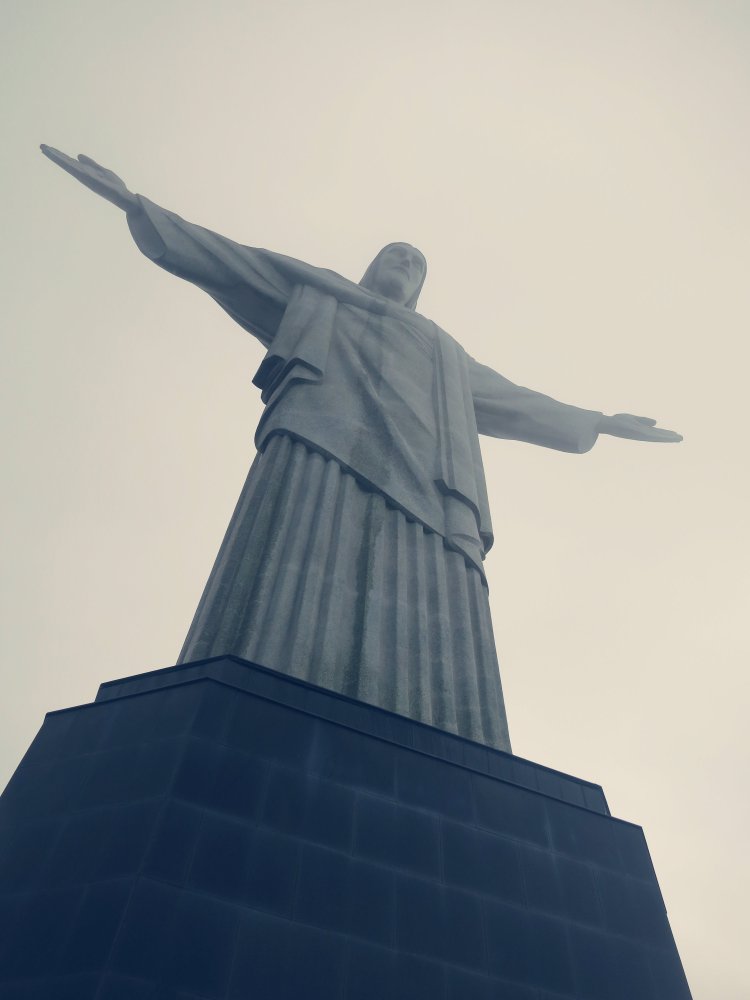
The unrelenting drizzle and piercing gusts of wind are amplified once I reached the top of Corcovado, soaring above Rio. After shimmying through the lines with my expert guide Neyla, crowding into the sky tram that climbs through the lush hills, separated merely by a glass window but still a world away from the curious stray dogs and child squatters still asleep on their dirty mattresses that hug the tram tracks, Christ the Redeemer greeted me.

I was raised Catholic but left it when I was 20. Today, I weave around atheism, agnosticism, and a subdued sense of spirituality, so I found it difficult to appreciate the emanating emotionality coming from fellow visitors on that early morning as they looked upon the the statue, tears in their eyes.

But regardless of one’s beliefs, it seems impossible that Christ the Redeemer would not affect you somehow. It stands before you, grand and welcoming, but you can’t help but look beyond the grandiose and examine its cracks and and stains. When looking back on why I took the photo, the imperfections are what pulled me in. I try to avoid filters and fancy effects with my pictures, so minus some auto-corrections, what you see here is what I saw, or at least, what I remember: the grays and blacks and pales, trying desperately to find hued blue contrasts but failing on that cloudy, frigid, windy morning.

Traveling and recording our experiences, desperately seeking to capture our memories of how we feel and what we think for that ephemeral moment, has a way of consistently surprising us, doesn’t it?

Link

The Man in Seat Sixty-One

The Man in Seat Sixty-One

I stumbled upon this blog when researching the part of my journey two years ago when I was planning to travel from Beijing to Moscow. All I can say about this web site is…wow. It seems that if there is a place that has any semblance of a railroad with passenger railcars, Mark Smith, the Englishman who runs this site as a hobby, has been on it. Obviously, some of the information at times may be slightly outdated, but there is a place for more recent travelers to the destination to post updated information.  The site is loaded with drop-down destination menus, schedules galore, and real and accurate pictures of what the seats and train cars look like. There is also information regarding bus lines for places where trains are not as popular.  If you have the opportunity to travel by rail anywhere in the world (and yes, even the the places where you wish you hadn’t traveled by rail), please consult this website before and during your trip. You won’t regret it!

Image

Temple Time Snack Time

Temple Time Snack Time

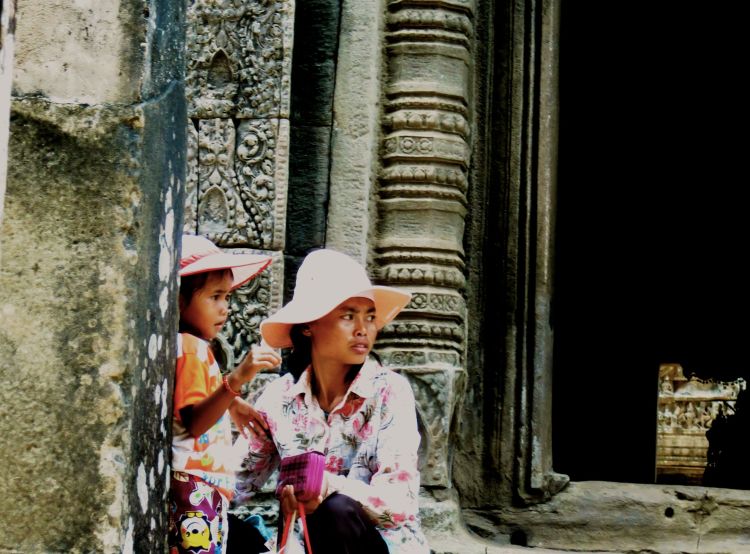
The afternoon heat beats down mercilessly in the afternoons of Cambodia’s jungles, where the angkors (temples), attract visitors–some better suited than others to withstand the heat. As I feebly sought shelter in one of the limestone corners, I remember thinking that despite my floppy hat and exponential SPF sunscreen and gallons of consumed Gatorade, I was just too weak–too ill-equipped to continue the afternoon exploring.

That was, until from the corner of my eye I saw these two visitors–the little boy was a trooper, refusing water from his mom, who, I am assuming, was insisting that he hydrate. He eventually acquiesced, took a few sips, and was rewarded with a snack. In a matter of seconds they ventured onwards. I don’t think they saw me languishing in the corner. Their pragmatism erased my sense of self-defeat, and I too continued on. These temples can’t explore themselves, you know.

Image

Imperial Pit Stops

Imperial Pit Stops

It was gray and cold when the train pulled into the Novosibirsk train station on the way from Beijing to Moscow in May 2012. The beautiful pastel-colored building was a welcome respite as I inched close to window pane to capture the shot. Taking pictures from a dining booth in a cramped cabin is tricky. I wanted so much to hop off the train and spend hours there, absorbing the architecture’s aching beauty, visual salve to my eyes tired of the stark tundra and birch forests to which I had become accustomed the few past days. But Moscow, still 48 hours away, awaited. And 10-minute pit stops on a six-day journey waited for no one.

I sat there shooting until the train pulled away.